
wrongful dismissal simply
When discussing employment law, one common question that arises is, “Can you define wrongful dismissal simply?” The answer is yes, although the legal implications can be complex, the basic idea is straightforward. Wrongful dismissal occurs when an employee is terminated by their employer in a way that breaches the terms of the employment contract or violates employment laws. It typically involves situations where an employee is let go without proper notice, severance pay, or a legitimate reason as required by law.
To define wrongful dismissal in simple terms, imagine an employee who has been working for a company for several years. If the employer suddenly fires them without giving the appropriate notice or a legal cause—such as theft, insubordination, or gross misconduct—then that employee may have been wrongfully dismissed. The law does not prevent employers from firing employees, but it does require that the termination process be fair and in line with legal obligations.
When someone asks, “Can you define wrongful dismissal simply?” it’s helpful to consider both contractual and statutory protections. Employees are often protected by an employment contract, which outlines the conditions under which they can be terminated. In addition to the contract, employment standards legislation also provides minimum requirements for things like notice periods and severance pay. If an employer violates these conditions, the employee may have grounds for a wrongful dismissal claim.
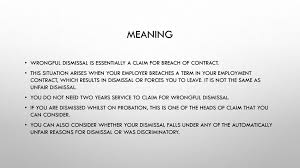
Can you define wrongful dismissal simply?
To further define wrongful dismissal, consider cases where employees are fired not because of poor performance, but because of discriminatory reasons such as race, gender, age, or disability. Even if the employer provides notice, if the reason for dismissal is illegal or discriminatory, it can still be considered wrongful. Likewise, dismissing someone as retaliation for whistleblowing or for taking legally entitled leave—such as maternity or medical leave—can also fall under this category.
Many people assume that employers have unlimited power to fire staff, but this is a misconception. The law aims to create a balance, allowing employers to manage their workforce while protecting employees from unfair treatment. If an employer wants to terminate someone for just cause, such as repeated lateness or serious misconduct, they must be able to prove that the employee’s actions justified immediate dismissal. Otherwise, they must provide the proper notice or pay in lieu of notice.
When answering the question, “Can you define wrongful dismissal simply?” it’s important to highlight that not all dismissals are wrongful. Employers can legally terminate employees for many reasons, as long as the process is lawful and fair. However, if an employer disregards the rules—whether written in a contract or established by employment law—the dismissed employee may be entitled to compensation.
In summary, to define wrongful dismissal in the simplest way, it means being fired without a good reason or without following the rules set out by law or contract. Employees who believe they have been wrongfully dismissed should seek legal advice to understand their rights and options. Knowing the basics helps both employers and workers handle employment terminations more fairly and legally.

Leave a Reply